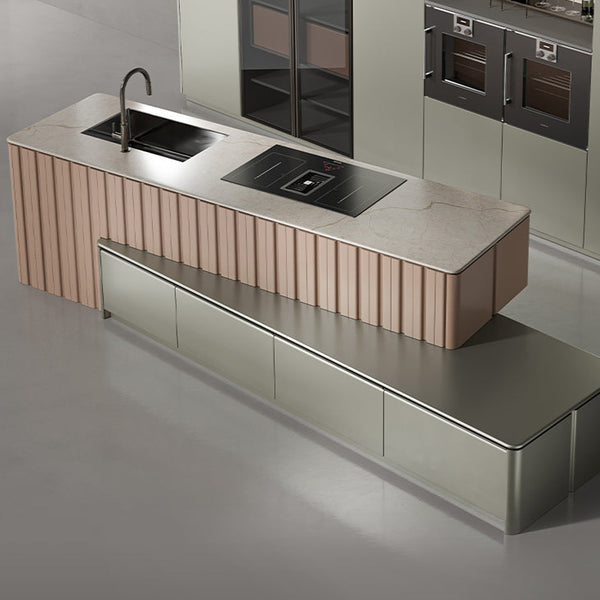


How Much Does Carpentry Cost in Singapore? 2026 Price Guide
If you are planning an HDB, BTO, condominium or landed-house renovation in Singapore, carpentry will likely be one of your biggest renovation expenses. Kitchen cabinets, built-in wardrobes, TV consoles, shoe cabinets, study desks and other built-in furniture are usually custom-made to suit the dimensions and layout of your home. Carpentry cost can quickly become a concern.
So, how much does carpentry cost in Singapore in 2026?
There is no single fixed price. The cost depends on the size of the carpentry, materials, finishes, hardware, design complexity, manufacturing method, installation requirements and the level of customization you choose.
As a broad 2026 market reference, published Singapore pricing guides place many standard built-in carpentry projects in the region of approximately S$130–S$450 per linear foot, depending heavily on the type of furniture and specifications. Typical full-home carpentry projects can range from around S$12,000 to S$30,000 or more, while premium or highly customized projects can exceed this range. These are market indicators rather than fixed quotations.
The best way to understand your renovation budget is therefore not to ask only, "How much per foot?" but to understand what is included in that price.
Last updated: August 2026

Quick Answer: How Much Does Carpentry Cost in Singapore?
For budgeting purposes, the following broad ranges can be useful:
| Carpentry | Indicative 2026 Singapore Range |
|---|---|
| Built-in wardrobe | Approximately S$1,500–S$7,000+ per wardrobe |
| Kitchen carpentry | Approximately S$4,000–S$18,000+ depending on size and specification |
| TV console / media cabinet | Approximately S$1,500–S$6,000+ |
| Full-height storage cabinet | Approximately S$2,000–S$6,000+ |
| Study desk / built-in study area | Approximately S$1,500–S$4,000+ |
| Full-home carpentry | Approximately S$12,000–S$30,000+ |
| Premium bespoke / solid wood furniture | Highly customized; quotation required |
These figures are indicative market ranges, not HomeShake's fixed prices. Current published Singapore guides show wide variations because carpentry specifications differ significantly between projects.
For example, a basic laminate wardrobe with standard internals can cost substantially less than a full-height wardrobe with premium doors, drawers, lighting, accessories and specialized internal storage.
What Does "Per Foot Run" Mean in Singapore Carpentry?
One of the most confusing aspects of carpentry pricing in Singapore is per-foot-run pricing, also written as PFR or linear-foot pricing.
If a carpenter quotes:
S$250 per foot run
and your cabinet is 10 feet long, you might initially assume that the carpentry costs:
10 × S$250 = S$2,500
However, you need to check exactly what the quotation includes.
For kitchen cabinets in particular, the price may be calculated separately for:
-
Bottom cabinets
-
Top cabinets
-
Tall units
-
Island cabinets
-
Internal drawers
-
Accessories
-
Hardware
-
Countertops
A "S$150 per foot" quotation can therefore be very different from another company's "S$250 per foot" quotation if the two quotations include different materials, cabinet heights, hardware or internal fittings.
Never compare carpentry quotations based only on the advertised price per foot run.
Ask for an itemised quotation showing the materials, dimensions, finishes, hardware, accessories, installation and exclusions.
What Determines the Cost of Carpentry in Singapore?
Several factors can significantly change the final price.
1. The Size of the Carpentry
The simplest factor is the amount of cabinetry you need.
A 6-foot wardrobe obviously requires less material and labour than a 12-foot wardrobe.
However, the relationship isn't always linear because complex designs, drawers, internal accessories and premium finishes can increase the price independently of the overall size.
For example, a large but simple wardrobe may cost less than a smaller wardrobe with:
-
Multiple drawers
-
Glass doors
-
Aluminium frames
-
Internal lighting
-
Pull-down hanging systems
-
Jewellery storage
-
Specialized accessories
2. The Cabinet Material
The material used for the cabinet carcass and doors has a major influence on price.
Common materials and finishes used in Singapore include:
-
Plywood
-
MDF
-
Particle board
-
Melamine
-
HPL
-
PET
-
Lacquer
-
Thermofoil / PVC
-
Wood veneer
-
Solid wood
Each has different characteristics in terms of appearance, durability, moisture resistance, maintenance and manufacturing cost.
For example, a standard melamine cabinet will generally have a different price point from a premium lacquered cabinet or a bespoke solid-wood piece.
If you want to understand the differences between these materials, see ourSingapore Carpentry Guide and our Carpentry Materials & Construction Guide.
3. The Finish
Two cabinets with the same dimensions can have very different prices because of their finishes.
Common options include:
Melamine
A practical and cost-conscious option available in many colours and wood effects.
HPL
High-pressure laminate offers a large range of colours, patterns and textures and is widely used in Singapore carpentry.
PET
PET finishes can provide a modern appearance and are often chosen for contemporary kitchens and wardrobes.
Lacquer / Spray Paint
Lacquered or spray-painted cabinetry can create a more seamless and premium appearance, but typically requires more complex manufacturing and finishing.
Wood Veneer
Veneer provides the appearance and character of real wood while using a veneered engineered panel construction.
Solid Wood
Solid timber is a premium material often selected for bespoke furniture, feature pieces, dining tables, doors and other applications where the natural character of wood is part of the design.
The more specialized the finish, the more important it becomes to compare the actual specification rather than simply comparing the price per foot.
4. Hardware Can Make a Big Difference
Hardware is often overlooked when comparing carpentry quotations.
Yet hinges, drawer runners and internal mechanisms have a major effect on the everyday experience of your furniture.
A cabinet with basic hinges and runners is not equivalent to one fitted with premium soft-close hardware.
Depending on your requirements, your cabinetry might include:
-
Soft-close hinges
-
Premium drawer runners
-
Full-extension drawers
-
Pull-down wardrobe systems
-
Magic corners
-
Tall-unit mechanisms
-
Internal lighting
-
Sliding door systems
-
Aluminium frames
-
Specialized kitchen storage accessories
HomeShake's OPPOLIA cabinetry, for example, uses premium hardware and offers a wide range of integrated accessories and storage solutions.
5. The Design Complexity
A straight cabinet is relatively straightforward to manufacture.
A highly customized cabinet can require considerably more design and manufacturing work.
Costs can increase when you add:
-
Curved elements
-
Fluted panels
-
Concealed doors
-
Angled cabinets
-
Integrated lighting
-
Feature walls
-
Glass doors
-
Aluminium frames
-
Special hardware
-
Multiple materials
-
Unusual dimensions
-
Integrated appliances
This is why two kitchens with the same number of linear feet can have very different final prices.
How Much Does a Kitchen Cabinet Cost in Singapore?
The kitchen is usually one of the most significant carpentry investments in a Singapore home.
A kitchen quotation can include:
-
Bottom cabinets
-
Top cabinets
-
Tall cabinets
-
Kitchen island
-
Appliance housing
-
Pantry storage
-
Internal drawers
-
Accessories
-
Hardware
-
Countertop
-
Backsplash
-
Installation
Published 2026 Singapore pricing guides show kitchen cabinetry commonly quoted in the broad range of roughly S$120–S$250+ per linear foot, although the exact basis of measurement varies considerably between contractors.
For this reason, don't ask only:
"What is your kitchen price per foot?"
Instead ask:
"What exactly is included in your kitchen quotation?"
This can reveal significant differences between apparently similar quotations.
For more information, see our guide to kitchen cabinets that are designed to last.
How Much Does a Built-In Wardrobe Cost in Singapore?
Built-in wardrobes are another major carpentry expense.
Published 2026 market guides commonly put full-height wardrobes in the broad range of approximately S$240–S$400 per linear foot, depending on door style, material, internal fittings and hardware.
However, pricing per foot does not tell the whole story.
A wardrobe can include:
-
Swing or sliding doors
-
Internal drawers
-
Hanging rails
-
Shelving
-
Shoe storage
-
Jewellery drawers
-
Pull-down rails
-
Lighting
-
Glass doors
-
Aluminium frames
-
Upholstered panels
-
Special accessories
For example, HomeShake's OPPOLIA wardrobe collection includes different configurations and published product prices ranging from approximately S$2,600 to S$4,688 for selected wardrobes, illustrating how design and configuration affect the final price.
You can explore HomeShake's built-in wardrobe solutions for examples of different configurations.
How Much Should You Budget for Carpentry in an HDB?
The answer depends heavily on the size of the flat and how much built-in furniture you want.
A typical HDB renovation may include:
Kitchen
Cabinetry, tall units and possibly an island.
Master Bedroom
Built-in wardrobe and dressing or vanity area.
Bedroom 2
Wardrobe and/or study desk.
Living Room
TV console, feature wall and storage.
Entrance
Shoe cabinet and storage.
A published 2026 market guide estimates approximately S$12,000–S$22,000 for a 4-room HDB carpentry scope covering kitchen cabinets, two wardrobes, a TV console and shoe cabinet. Another published guide places typical whole-home carpentry packages around S$15,000, with higher-spec projects reaching S$30,000 or more.
These figures should be treated as budgeting references rather than standard market prices.
A minimalist HDB with limited built-ins can cost considerably less, while a highly customized home with premium materials and hardware can cost considerably more.
What About BTO Carpentry?
BTO apartments often have relatively standardized layouts, making it easier to estimate the amount of carpentry required.
A typical BTO carpentry package might include:
-
Kitchen cabinets
-
Master bedroom wardrobe
-
Bedroom wardrobes
-
TV console
-
Shoe cabinet
-
Study desk
-
Additional storage
However, you should avoid choosing a BTO carpentry package based solely on the headline price.
Check:
What material is used?
What hardware is included?
How many feet of carpentry are included?
Are internal drawers included?
Are countertops included?
Are appliances included?
Is installation included?
What warranty is provided?
For HDB projects, also check the applicable renovation requirements and engage appropriately qualified contractors for regulated renovation works. HDB provides its own renovation guidelines and requires homeowners to use contractors from its Directory of Renovation Contractors for renovation works.
Does Condo or Landed Carpentry Cost More?
It can, but not simply because the property is a condo or landed house.
The price is primarily driven by the scope and specification.
A condominium renovation may involve:
-
Premium finishes
-
Integrated appliances
-
Full-height cabinetry
-
Feature walls
-
Walk-in wardrobes
-
Bespoke furniture
-
Concealed doors
A landed property may require even more extensive customization because of:
-
Larger spaces
-
Multiple floors
-
Large kitchens
-
Libraries
-
Walk-in wardrobes
-
Home offices
-
Staircase areas
-
Bespoke furniture
-
Complex site installation
This is one reason why a "price per square foot of home" is usually less useful for carpentry than an itemised project quotation.
Why Are Some Carpentry Quotes Much Cheaper Than Others?
If you receive three quotations and one is dramatically cheaper, don't automatically assume you've found a bargain.
Check whether the specifications are actually equivalent.
A lower quotation may use:
-
Different board materials
-
Thinner panels
-
Lower-cost hardware
-
Fewer internal drawers
-
Simpler construction
-
Fewer accessories
-
Different finishes
-
Lower installation allowances
-
Different cabinet dimensions
-
Exclusions that appear later as variations
The important question isn't:
"Who is the cheapest carpenter?"
It is:
"Which quotation gives me the best combination of quality, specification, service, warranty and price?"
This is why HomeShake recommends comparing the complete specification, not simply the headline price.
10 Things to Check Before Accepting a Carpentry Quote
Before signing a carpentry contract in Singapore, ask for clarity on:
-
Carcass material — What board is being used?
-
Panel thickness — What thickness is specified?
-
Door material — Melamine, HPL, PET, lacquer, veneer or another finish?
-
Hardware — Which hinges and drawer runners are included?
-
Internal fittings — Are drawers, shelves and accessories included?
-
Dimensions — How many feet of cabinetry are included?
-
Installation — Is delivery and installation included?
-
Other trades — Are plumbing, electrical and countertop works included or separate?
-
Warranty — What does the warranty cover?
-
Exclusions — What could become an additional charge later?
A good quotation should make it possible for you to understand what you are actually buying.
Should You Choose the Cheapest Carpentry Quote?
Not necessarily.
Carpentry is something you will interact with every day for many years. A kitchen drawer may be opened thousands of times. A wardrobe door may be operated every day for a decade or more.
For that reason, it can make sense to invest more in areas where quality has a meaningful long-term impact:
-
Cabinet construction
-
Hardware
-
Moisture protection
-
Finishing
-
Installation
-
Internal storage
-
Warranty
-
After-sales service
You may also decide to spend more on visible feature pieces while using simpler specifications for less important storage.
A good carpenter or renovation contractor should be able to help you allocate your budget intelligently, rather than simply maximizing the amount you spend.
Why HomeShake Is a Different Carpentry Partner in Singapore
HomeShake has been making furniture in Singapore since 1972, giving the company more than five decades of experience in furniture-making and carpentry. Today, HomeShake combines traditional Singapore craftsmanship with modern cabinetry solutions and renovation expertise.
HomeShake operates an in-house carpentry workshop and showroom in Kaki Bukit, while also partnering with OPPOLIA for advanced factory-manufactured cabinetry. The company's FAQ explains that traditional carpentry is manufactured in its Singapore workshop, while OPPOLIA cabinetry is manufactured in its automated Guangzhou facility.
This gives homeowners access to different approaches depending on their project.
Traditional HomeShake Carpentry
Ideal for projects requiring:
-
Custom dimensions
-
Bespoke furniture
-
Solid timber
-
Wood veneer
-
Custom joinery
-
Local craftsmanship
-
Highly individualized designs
OPPOLIA by HomeShake
Ideal for homeowners looking for:
-
Factory precision
-
Extensive finishes
-
Contemporary cabinetry
-
Formaldehyde-conscious material options
-
Premium hardware
-
Integrated accessories
-
Consistent manufacturing
-
Modern kitchen and wardrobe systems
OPPOLIA's cabinetry incorporates features including low-emission/formaldehyde-related certifications and testing, antibacterial coatings, CARB certification and German HOMAG CNC manufacturing, according to HomeShake's published product information.
HomeShake also provides a minimum 5-year warranty on carpentry products, with selected furniture covered for longer periods.
This combination of local craftsmanship, advanced cabinetry manufacturing, professional installation and warranty support is one reason HomeShake can be particularly suitable for homeowners who care about long-term quality rather than simply finding the lowest initial price.
Is HomeShake More Expensive Than Other Carpenters?
There is no meaningful answer without comparing the actual specifications.
HomeShake does not believe that "cheap carpentry" and "premium carpentry" can be compared purely by price per foot.
Instead, the right comparison should consider:
Materials + construction + hardware + finish + design + installation + warranty + service.
For a simple project, a straightforward local carpentry solution may be the most appropriate choice.
For a highly customized home, bespoke solid wood furniture or premium cabinetry, investing in better materials and manufacturing may provide considerably more value over the lifetime of the furniture.
HomeShake can discuss both approaches and recommend a solution based on your budget, design requirements, property type and expected level of customization.
How to Get an Accurate Carpentry Quote in Singapore
Online price guides are useful for planning, but they cannot replace an actual quotation.
For a meaningful quotation, a carpenter will generally need to understand:
-
Your property type
-
Floor plan
-
Cabinet dimensions
-
Design
-
Materials
-
Finishes
-
Hardware
-
Internal accessories
-
Site conditions
-
Installation requirements
-
Other renovation works
At HomeShake, more complex projects are discussed with the client before an itemised quotation is prepared. The company explains that pricing depends on design, dimensions and materials, rather than simply applying a universal price per foot.
Homeowners can also visit the HomeShake / OPPOLIA flagship showroom in Kaki Bukit to compare materials, finishes, hardware and cabinetry solutions in person. The showroom has a large selection of door and colour samples and displays kitchens, wardrobes, TV consoles, storage solutions and other carpentry applications.
Final Takeaway: What Should You Budget for Carpentry in Singapore in 2026?
For a broad starting point, S$12,000–S$30,000+ is a reasonable range to consider for substantial whole-home carpentry, while individual built-in pieces can range from around S$1,500 to several thousand dollars depending on their size and specification. Premium bespoke projects can go significantly higher. Current 2026 market guides show wide ranges, so these figures should be used for budgeting rather than as fixed market rates.
The most important lesson is:
Don't compare carpentry quotations based only on the price per foot run. Compare the complete specification.
Look at the materials, construction, hardware, finishes, accessories, installation, warranty and after-sales service.
And if you are renovating an HDB, BTO, condo or landed property in Singapore, choose a carpentry partner that can explain why a particular solution is appropriate for your home—not simply tell you how much it costs.
With more than 50 years of experience, an in-house Singapore workshop, an extensive showroom and access to OPPOLIA's advanced cabinetry solutions, HomeShake offers homeowners a combination of traditional craftsmanship and modern manufacturing that can be tailored to different budgets and levels of customization.
Thinking about your carpentry budget?
Visit the HomeShake showroom at 81 Kaki Bukit Avenue 1, Singapore, to see cabinetry, materials, finishes and hardware in person and discuss your project with the team.
Useful Links: